Detect cardiovascular
risk in seconds
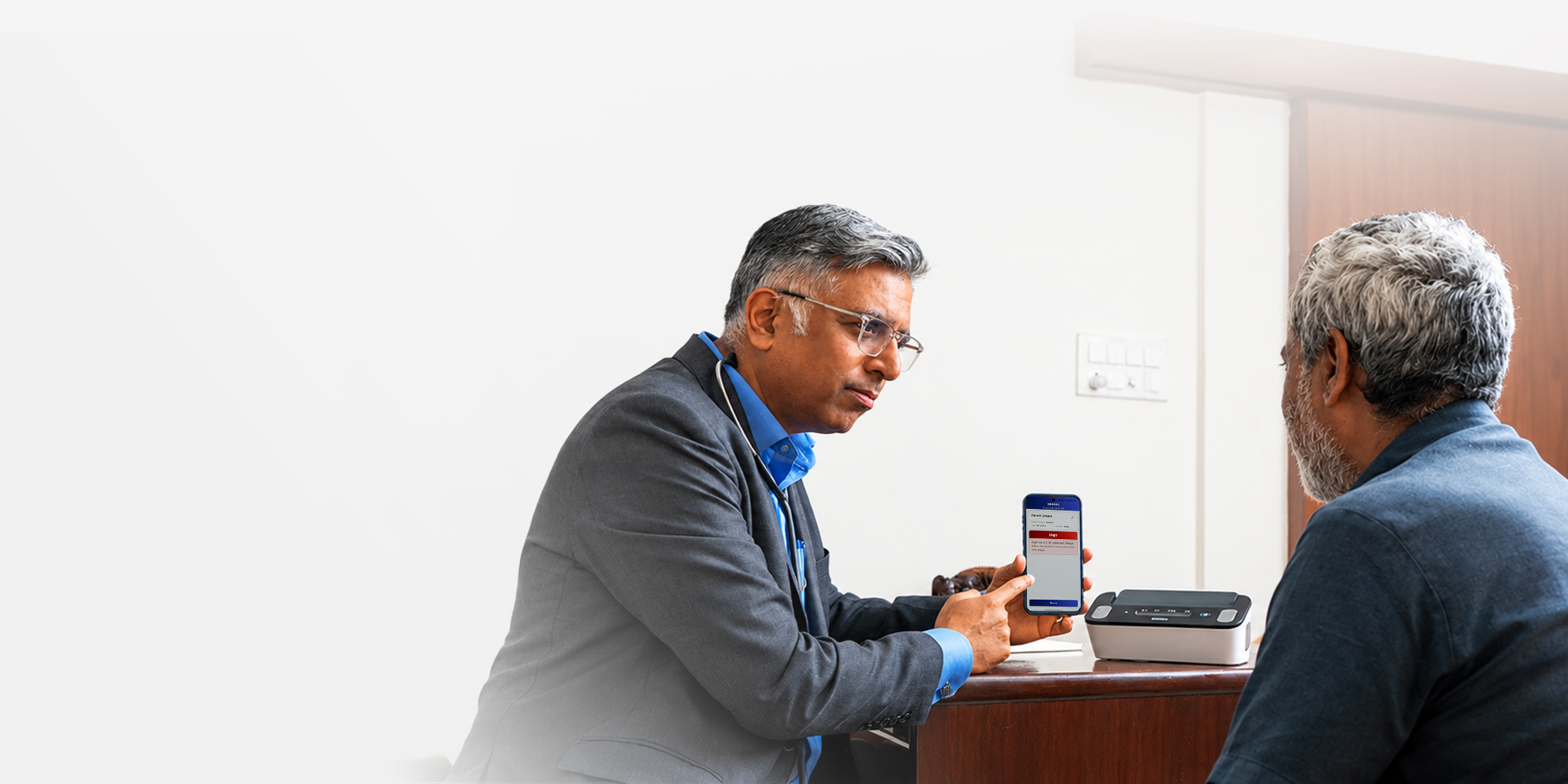
TCC reads a quick single-lead ECG and gives you a Low, Moderate or High risk category in seconds. Makes it easy to decide what to do next with each patient.






Trusted by healthcare teams delivering earlier
cardiac intervention.
Clinical Validation
Built and Validated on Real-World ECG Data
Developed using millions of ECG recordings collected across hospitals and clinics in India, and validated on independent patient cohorts not used during model development.
Want the detail? Full methodology, confidence intervals and risk-class definitions are set out in the validation whitepaper.
Request the Full Validation ReportThe Gap
The gap is detection,
not treatment
Healthcare systems know how to treat cardiac disease. The larger challenge is finding people before they become patients. Many remain unaware of their risk and therefore never reach a doctor until it is too late.
110 million
Indians live with cardiovascular disease today a number set to more than double by 2050.
1 in 4
deaths in India are due to heart disease.
About 1 in 5
of the world's cardiac deaths happen in India.

Detected
The few who get diagnosed.
Undetected
The millions who don’t..
How TCC is different
Built for clinical screening, not consumer monitoring
Conventional approaches concentrate on patients with symptoms, known risk factors, or clinical suspicion.TCC enables large-scale screening during routine healthcare interactions, creating more opportunities to detect cardiac conditions earlier.
 Tricog CardioCheck
|
ECG in Watch
|
Traditional Triage
|
Other 1-Lead ECGs
|
|
|---|---|---|---|---|
| Who it's for | Every patient at the clinic | Consumer smartwatch users | Only patients a doctor suspects | People who already know they have a condition |
| What it looks for | Findings across Low / Moderate / High Risks | AFib + irregular rhythm | Depends on symptoms | 4 rhythms only |
| What you get back | A clear risk level + the next step | A rhythm alert | A judgement call | A rhythm label |
| Fits the vitals workflow |
Yes, adds ~30–50s
|
X | X | X |
| Cardiologist on site |
Not needed
|
X | Required | X |
| Time to result | ~10s (after a 30-sec ECG) | X | X | X |
| Device | OMRON Complete (only) | Consumer smartwatch | 12-lead machine | Own device |
| Regulatory | CDSCO-certified, Class B SaMD | Consumer | X | Consumer |
In the flow of a normal visit
Fits the existing outpatient workflow.
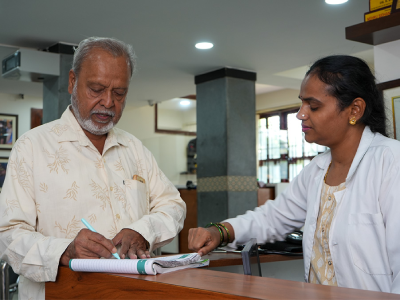
Check in as usual.
Patients visit healthcare providers for a wide range of reasons. By embedding screening into routine interactions, TCC helps identify potential cardiac conditions that might otherwise remain unnoticed.
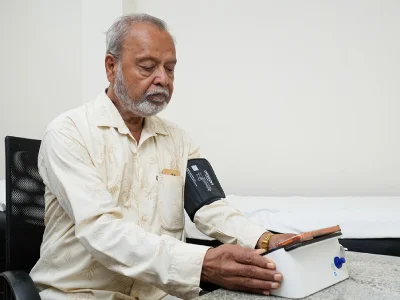
During routine vitals.
A 30-second ECG is captured using the OMRON Complete device alongside routine BP, SpO₂, height, and weight measurements. The patient places their fingers on the pads and remains still for 30 seconds. The ECG is taken as part of the same routine visit, without adding another step for the patient.
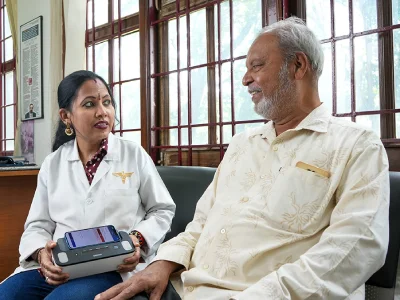
A result in seconds.
A Low, Moderate or High risk level is displayed on the staff member’s phone, providing an immediate indication for the next step in care.
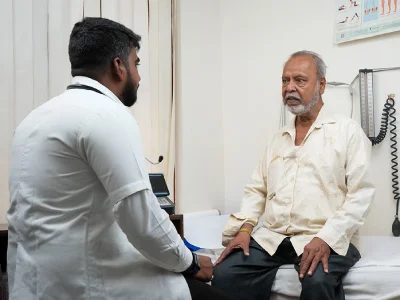
A clear next step.
Low: Continue routine care.
Moderate or High: Refer for a 12-lead ECG and clinical review.
June 2025. A village clinic outside Bengaluru.
400+ People Screened. One Seamless Path from Screening to Clinical Care.
Read the storyEverything the clinician needs at the point of care
Request a Live DemoThe output is a structured triage signal that arrives while the patient is still in front of you.
Risk Category: Low, Moderate or High
Clinical Insights: The waveform patterns that drove the classification
Referral Guidance: The recommended next action (12-lead ECG and clinical review when
indicated)
Where CardioCheck is used
The same 30-second capture, adapted to your setting from high-volume OPDs to rural health centres.

Screens every patient at intake without slowing the queue, so priority follows cardiac risk, not arrival order.
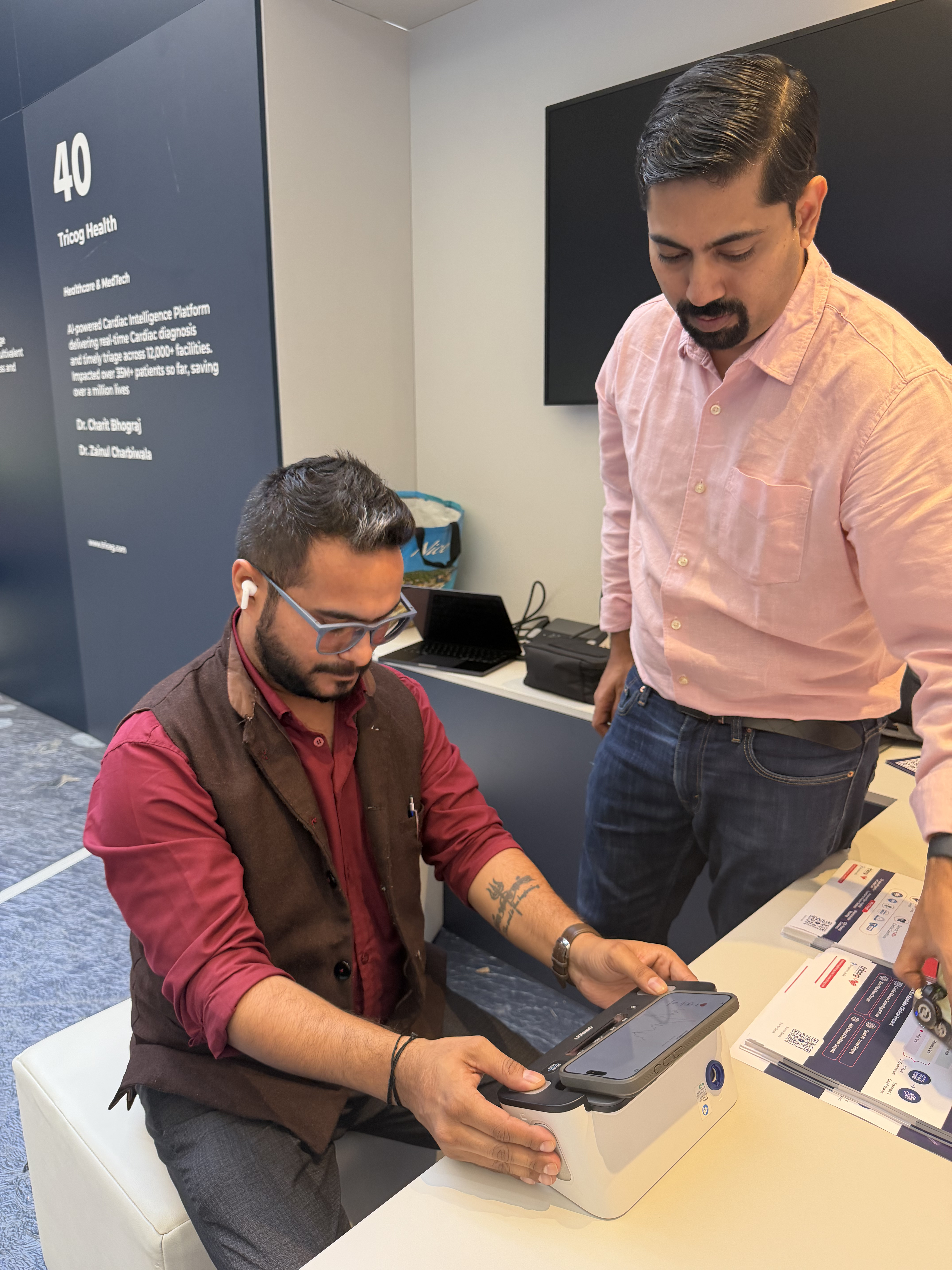
Adds a cardiac risk category to routine check-ups for asymptomatic patients who may otherwise be missed by conventional screening.
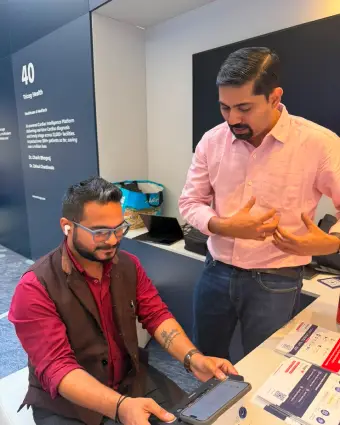
With no cardiologist on site, frontline staff get an objective basis for referral.
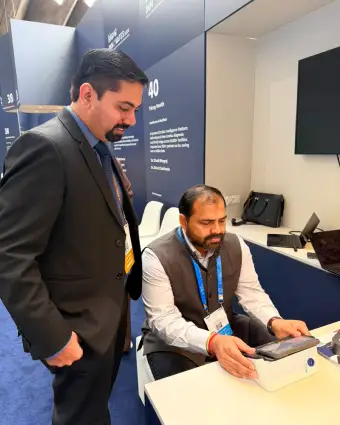
Single-doctor practices with no diagnostics get a structured way to decide who to refer onward.
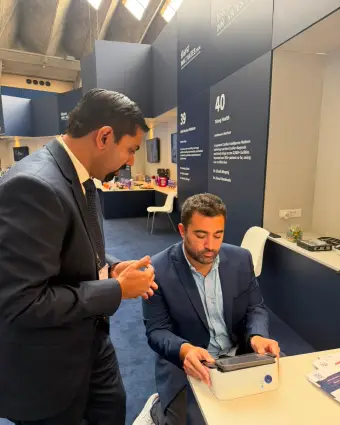
Portable and usable by non-specialist staff, with the risk category available immediately.
Questions, answered.
TCC does not diagnose a cardiac condition. The final assessment and next steps are determined by the treating clinician based on the patient’s symptoms, history, examination, and other clinical findings.
Through our partnership with OMRON Healthcare, ECG data captured by these devices is securely transmitted to the cloud and analyzed by the TCC algorithm to provide a Low, Moderate, or High cardiovascular risk assessment in approximately 10 seconds.
A 12-lead ECG provides a more comprehensive assessment of the heart’s electrical activity and may be recommended by a clinician following a TCC result, based on the patient’s symptoms, history, and clinical findings.
TCC is also validated on separate ECG data to assess how reliably it identifies different levels of cardiac risk.
The output should be considered in consultation with a qualified healthcare professional.
- People below 18 years of age
- Pregnant women
- Patients with pacemakers
- Patients with Implantable Cardioverter Defibrillators (ICDs)
Resources
Explore perspectives on cardiac screening, undetected risk, and the role of earlier detection in improving care.

AI ECG screening is a way of using an AI to look at an ECG and flag patients who may need a closer look within seconds ...
Read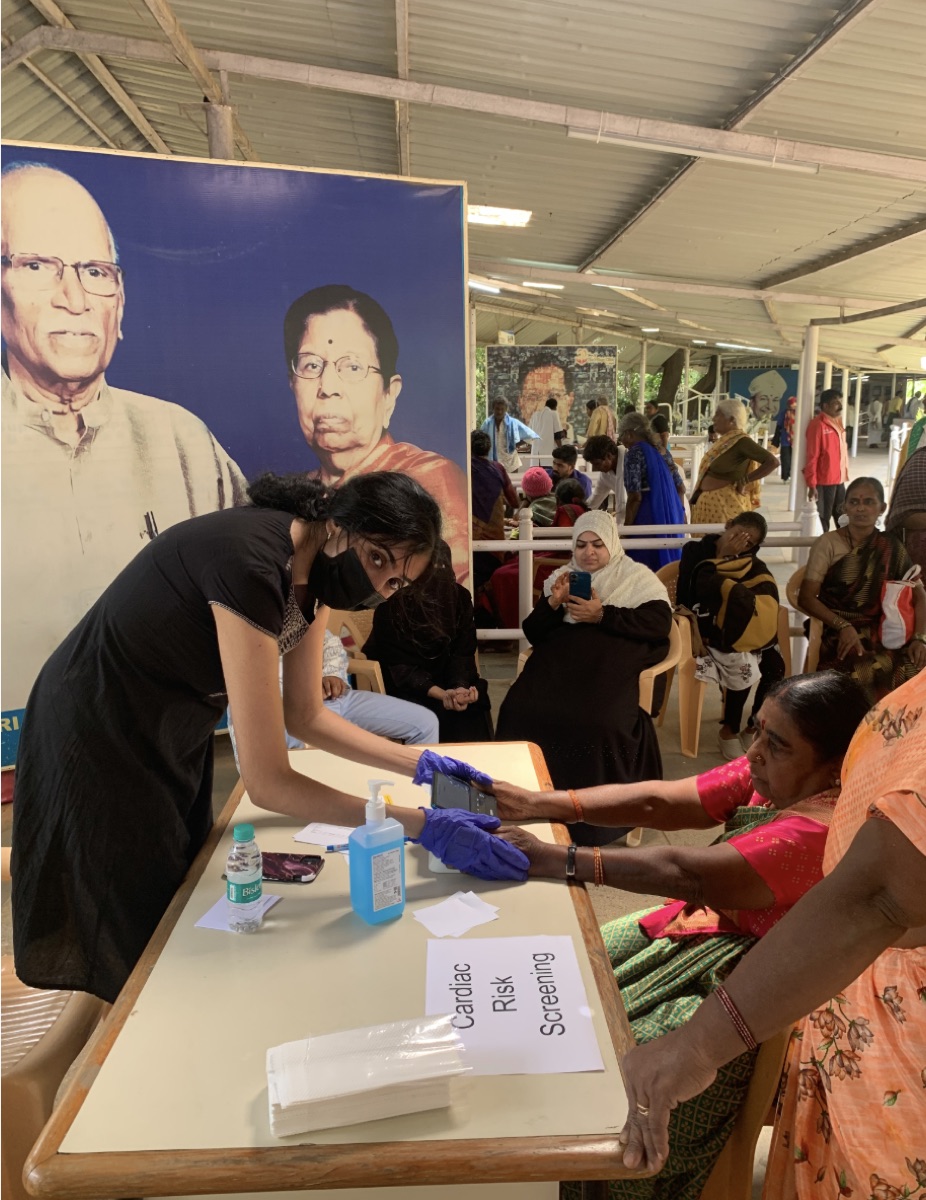
Where Mission Meets Reality: 400 Cardiac Screenings in a Single Day at a Village Clinic
On 8 June 2025, Tricog ran its first large-scale field deployment of Tricog CardioCheck at a village clinic outside Bengaluru ...

From a Busy OPD to Care at Home: The Tricog Connected Pathway
A crowded OPD has one queue that everyone can see and another that the clinical team has to work out ...
What Is ECG Risk Stratification? How AI Can Help Sort ECGs by Risk
An ECG can tell you a lot about the heart. But there is another question that matters just as much: how urgently does this ECG need attention? ...