
Where Mission Meets Reality: 400 Cardiac Screenings in a Single Day at a Village Clinic
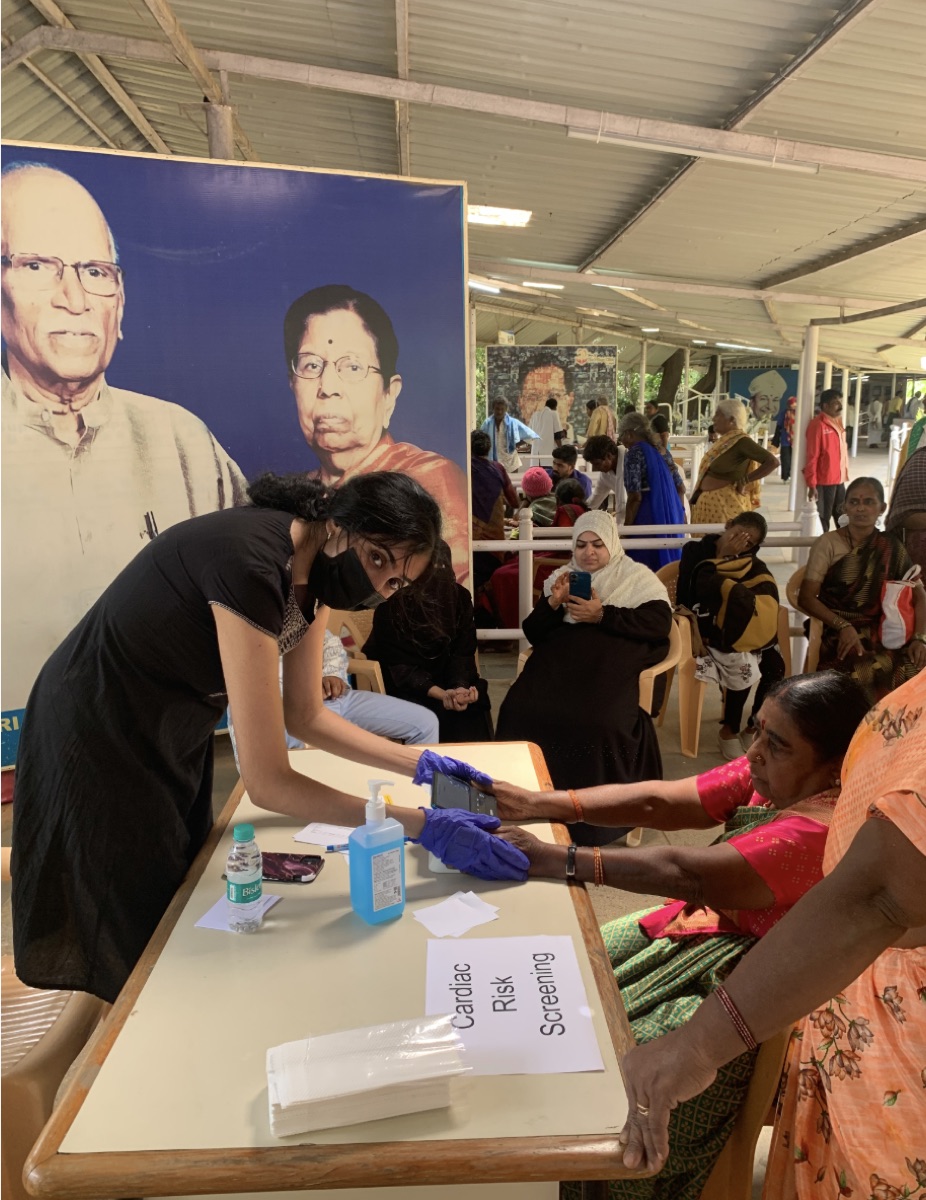
On 8 June 2025, Tricog ran its first large-scale field deployment of Tricog CardioCheck at a village clinic outside Bengaluru. Over 400 patients were screened in one day using AI-powered single-lead ECG, with moderate and high-risk patients referred straight to a 12-lead ECG and a doctor.
What happened at the Village Clinic on 8 June 2025?
For years, Tricog has spoken about a single mission: early detection and timely treatment of heart disease at scale. On 8 June 2025, that mission moved from idea to impact in one of the most meaningful settings possible; the Village Clinic founded by Dr. Ramana Rao on the outskirts of Bengaluru.
Every Sunday for more than five decades, Dr. Ramana Rao has opened the doors of the Village Clinic to hundreds of patients who may otherwise have had no access to care. His consistency, compassion and clinical discipline have inspired generations of physicians. For the team at Tricog, this setting was not just familiar. It was personal.
It allowed Tricog to take Tricog CardioCheck (TCC) into the real world and serve the people who need it most.
Why does India need cardiac screening outside hospitals?
The case for community screening is not a marketing argument. It is an arithmetic one.
- Cardiovascular disease accounted for 28.1% of all deaths in India in 2016, up from 15.2% in 1990, according to the Global Burden of Disease analysis published in The Lancet Global Health.
- WHO India reports that cardiovascular conditions are responsible for nearly half of all deaths among Indians aged 40 to 69 — the working years, not old age.
- India had roughly 5,500 cardiologists nationwide as of 2021, per a 2026 European Heart Journal review, for a population above 1.4 billion.
- The Ministry of Health and Family Welfare’s Rural Health Statistics 2022-23 recorded 21,964 specialist posts required at rural Community Health Centres against just 4,413 in position — a shortfall of close to 80%.
Diagnosis, not treatment, is the bottleneck. A person in a village with early, silent cardiac risk has no realistic first step. They do not see a cardiologist because there isn’t one nearby, and they do not get an ECG because nobody is looking. Screening has to travel to them.
How does AI-powered single-lead ECG screening work?
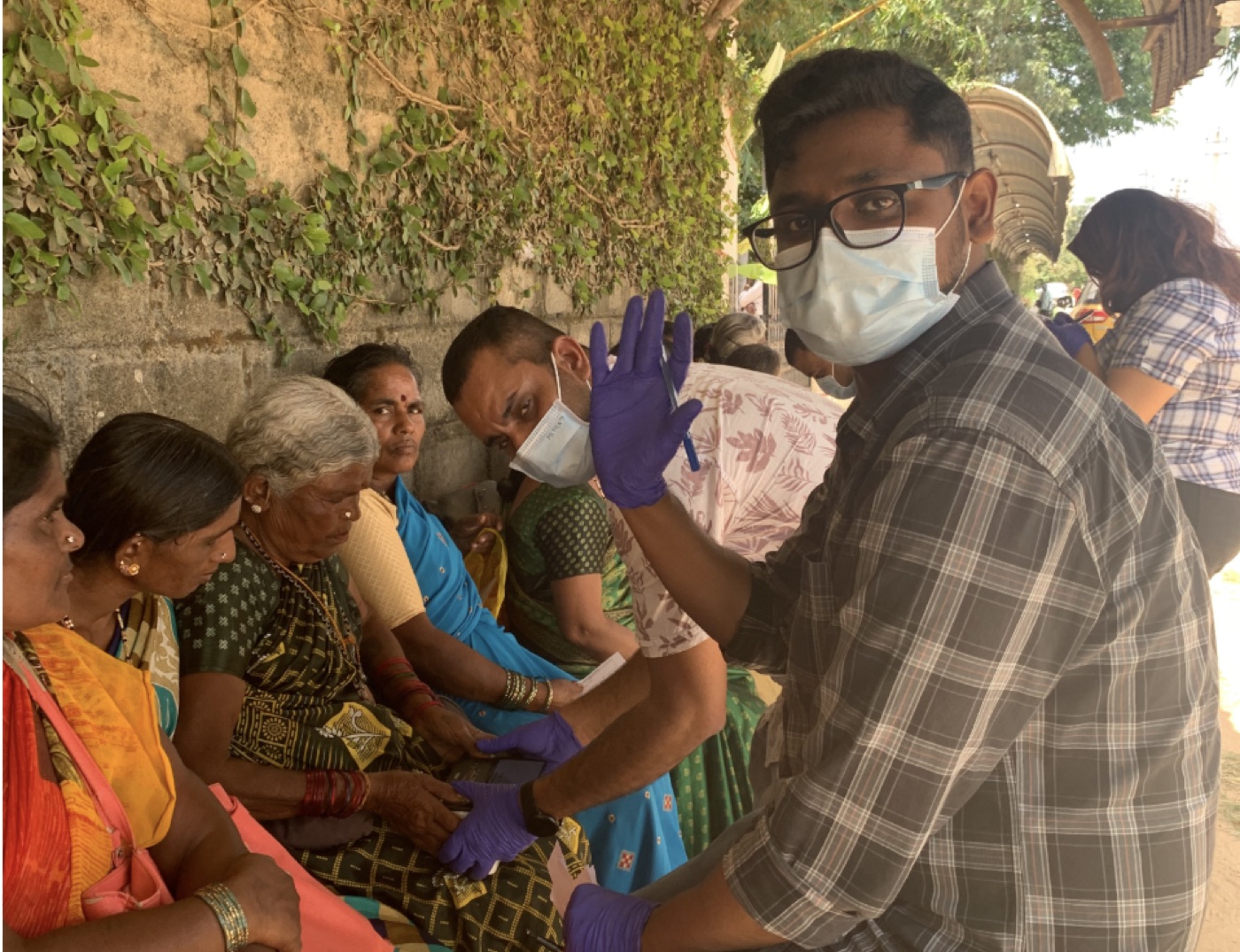
A conventional 12-lead ECG needs a machine, a technician and a doctor to interpret the trace. AI-powered screening compresses that chain. A patient places their fingers on a handheld device, a single-lead ECG is captured in about 30 seconds, and an algorithm returns a risk classification.
TCC works this way. ECG data captured on an OMRON Complete blood pressure monitor with integrated ECG is transmitted to the cloud, analysed by Tricog’s algorithms, and returned through a clinician-facing app as a three-level risk assessment — Low, Moderate or High — in approximately 10 seconds.
The important design choice is what the tool does not do. It does not diagnose. It sorts a queue, so that scarce specialist attention lands on the people most likely to need it.
That framing is supported by the evidence base. In a 2025 npj Digital Medicine analysis of the VITAL-AF randomised trial, an AI model applied to handheld single-lead ECGs from 15,694 primary care patients aged 65 and over predicted two-year incident atrial fibrillation with an AUROC of 0.695 — statistically comparable to the established CHARGE-AF clinical risk score at 0.679. Modest standalone discrimination; meaningful value as a filter.
How do you run a cardiac screening camp for 400 patients?
The operating model on 8 June was deliberately simple.
- Six devices, two locations. Six OMRON Complete devices screened patients waiting outside the clinic, with a dedicated station inside so nobody in the queue was missed.
- Two volunteers per screening point. One guided patient posture, collected details and explained the result. The other logged the data and coordinated next steps. Splitting the human role from the data role kept throughput up without rushing patients.
- A defined referral path. Patients identified as Moderate or High risk were referred for a 12-lead ECG and further care. Clinical decisions remained with the treating doctors throughout.
What did the deployment reveal?
Three things, none of them algorithmic.
Low-risk results changed behaviour. Several patients expressed relief after receiving a Low-risk result, and went on to encourage family members to get screened.
Curiosity was an asset. Others approached the stations eager to understand how the device worked and what it could tell them, and explaining it built trust faster than any messaging could.
The operational layer mattered most. Device performance, app sync and queue workflow were what determined whether 400 screenings happened or 150 did. When Dr. Ramana Rao and his team experienced the screening themselves, their feedback on both the platform and the presence of Tricog’s volunteers meant a great deal to everyone involved.
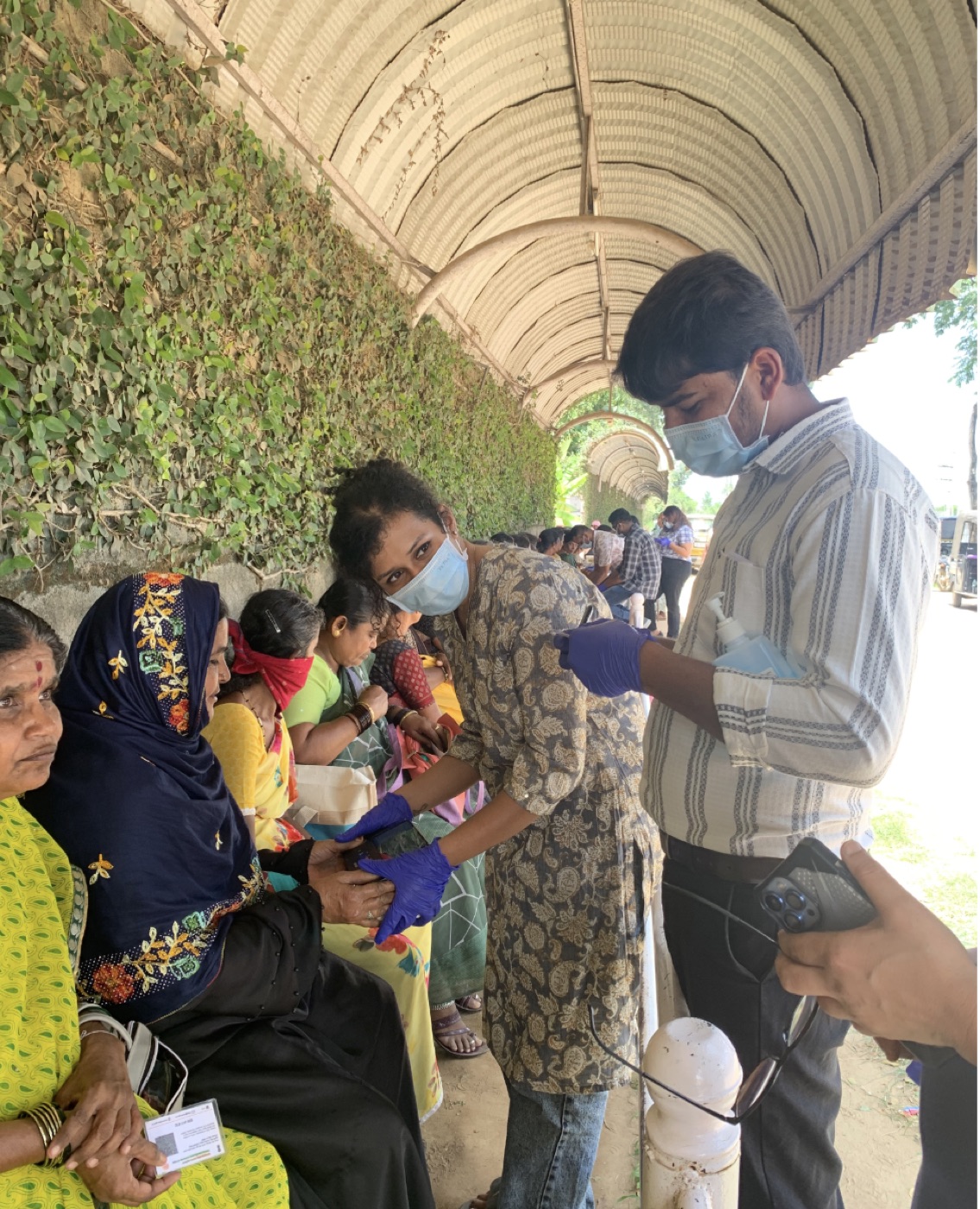
The team that made it possible
This initiative was driven by people who showed up with ownership, care and quiet determination: Vamshi, Anil, Yashodhara, Praveen, Prajwal, Jeeshitha, Sarayu, Rajesh, Ashrit, Priyanka, Pratistha, Debjani, Zainul, Dr. Sudha and Ankur.
Each of them made it work — for the patients, for the clinic, and for what Tricog is building.
By the numbers
Over 400 patients screened in a single day
A complete care journey from TCC to 12-lead ECG to clinical consult
Field validation of TCC’s device performance, app sync and end-to-end workflow
Rich feedback from patients, doctors and stakeholders on usability and experience
Why this matters
This was not a test run. It was a moment of truth, and a reminder that in healthcare, scale and science must stay rooted in trust and connection. Technology only becomes meaningful when it reaches real people, in real need, in real time.
Tricog will continue to refine Tricog CardioCheck and strengthen every aspect of the experience. But 8 June was a reminder of what matters most: purpose, when backed by people, creates lasting change.
Let’s keep building. With science. With empathy. With intent.
Frequently asked questions
Is AI-powered ECG screening a replacement for a cardiologist?
No. It sorts patients by risk level and prioritises referrals. Diagnosis and treatment decisions remain with the treating physician.
How long does one screening take?
Roughly 30 seconds to capture the ECG, with a cloud-analysed risk result returned in about 10 seconds on TCC. Most of the real-world time goes to registration and explaining results.
Can non-specialists run the screening?
Yes. Trained health workers or volunteers can capture readings and communicate results, which is what makes community-scale screening possible where specialists are unavailable.
Sources
- “The changing patterns of cardiovascular diseases and their risk factors in the states of India: the Global Burden of Disease Study 1990–2016,” The Lancet Global Health, September 2018 — healthdata.org
- World Health Organization India, Cardiovascular diseases — who.int
- Judith Ozkan, “India: challenges and opportunities for cardiologists,” European Heart Journal, Vol. 47, Issue 13, April 2026 — academic.oup.com
- Rural Health Statistics 2022-23, Ministry of Health and Family Welfare, Government of India, released September 2024. Figures as reported by Business Standard
- “Artificial intelligence-enabled analysis of handheld single-lead electrocardiograms to predict incident atrial fibrillation: an analysis of the VITAL-AF randomized trial,” npj Digital Medicine, 2025 — nature.com
Bring TCC to your clinic.
Thirty seconds per patient, in the queue, before the consult.
Continue Reading

AI ECG screening is a way of using an AI to look at an ECG and flag patients who may need a closer look within seconds ...
A crowded OPD has one queue that everyone can see and another that the clinical team has to work out ...
An ECG can tell you a lot about the heart. But there is another question that matters just as much: how urgently does this ECG need attention? ...